Problem Statement
Commuter students lack solutions that support both event discovery and relationship building, leaving them without accessible opportunities to socially participate
Research
Literature analysis revealed commuting reduced student motivations, but peer relationships were driving factors towards social participation
My research findings analyzing 3 academic papers, revealed that the physical and mental implications of commuting negatively impacts students desire to participate socially:
63%
of students believed their commute discouraged them from coming to campus
65%
of students believed their commute discouraged them from participating in campus events and activities
53%
of civic participation influence comes from friends
User interviews validated the impacts of commuting and importance of peers, but highlighted the role of social environment
I conducted two out of six user interviews with past and current commuter students to get a well rounded perspective of the barriers commuter students experience
"Commuting does limit and constrict me. Just not being able to build that community, I feel like you definitely don't build the same kind of connections with the people around you. "
Participant 1

"[Campus] is less community focused. When that environment isn't immediately available to me or my peers, it's a bit harder to make connections."
Participant 2


Key User Interview Findings
Commuting Constrains
The time, distance, and location implications of commuting creates mental and physical social barriers
Peers Incentivize Participation
Peer relationships with those who share similar interests, are highly valued and create social community
Opportunities are Obsolete
Social opportunities are limited due to ineffective social environments and lack of resources
One study shows digital communities are effective while competitor analysis reveals an opportunity gap in the market
Digital communities that connect users pre and post event, provide an effective environment for social connectivity. However, current platforms are catered to either event discovery or relationship building, creating the opportunity to create a platform designed for both
Solution
A centralized database that creates accessible social opportunities, bridging the gap between event discovery and social interactions
Ideation
There were two main issues to design for
Research findings revealed that issues could be categorized into two main groups related to socialization and location. Two user personas embodying both issues highlighted the design opportunities
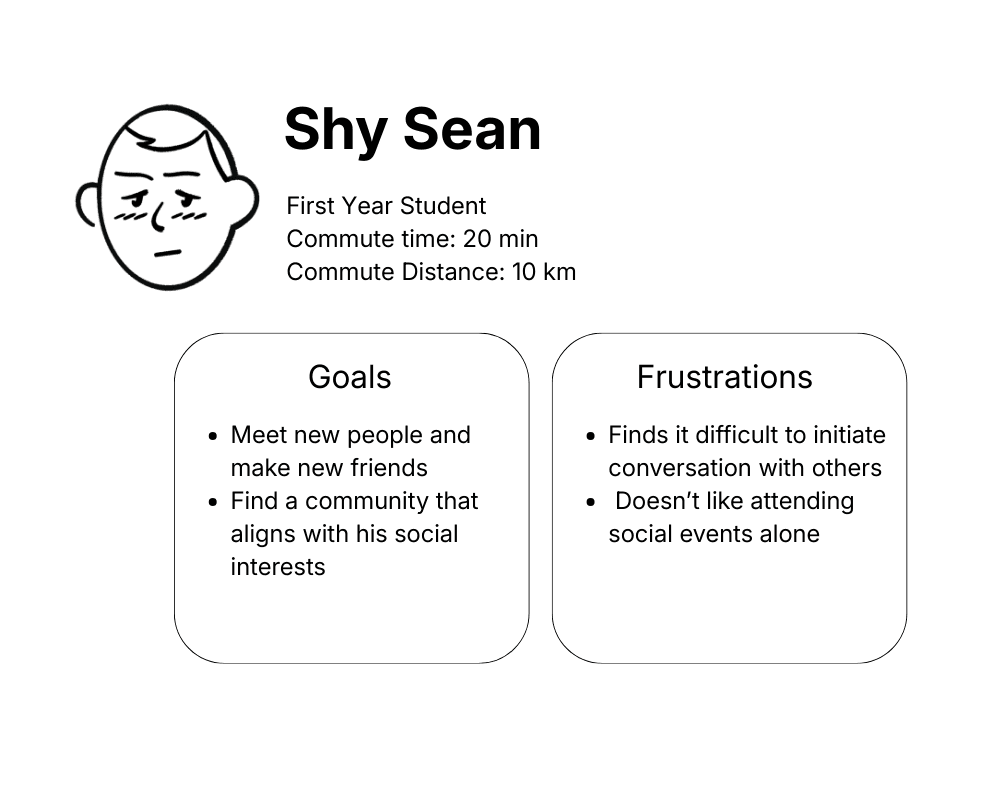
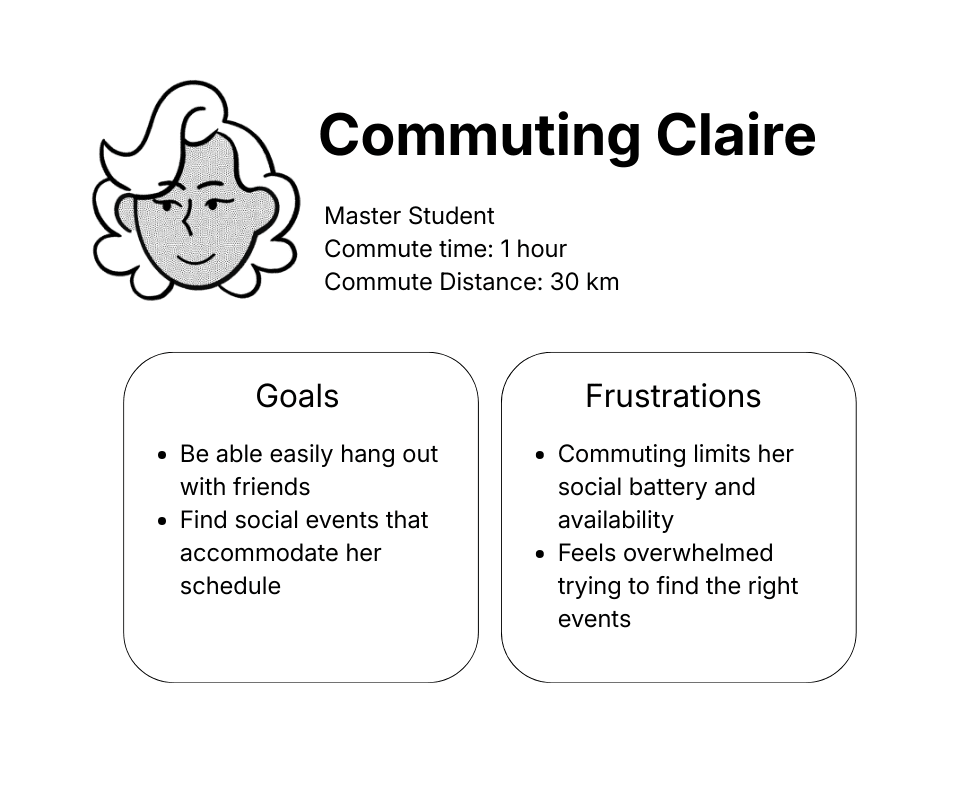
Socialization Design Opportunities
Event recommendations based on social preferences
Social connectivity features that allow for user interactions pre and post event
Location Design Opportunities
Event recommendations based on time, distance, and location preferences
Detailed event pages to inform users on event experiences
In app ticketing for user convenience
User task flow from event recommendation to registration was seen as most foundational
Based on the golden user path, the design focus shifted towards curated event discovery and less on social interactivity. Home, Search, Event, and Ticket pages were the most foundational for the UI
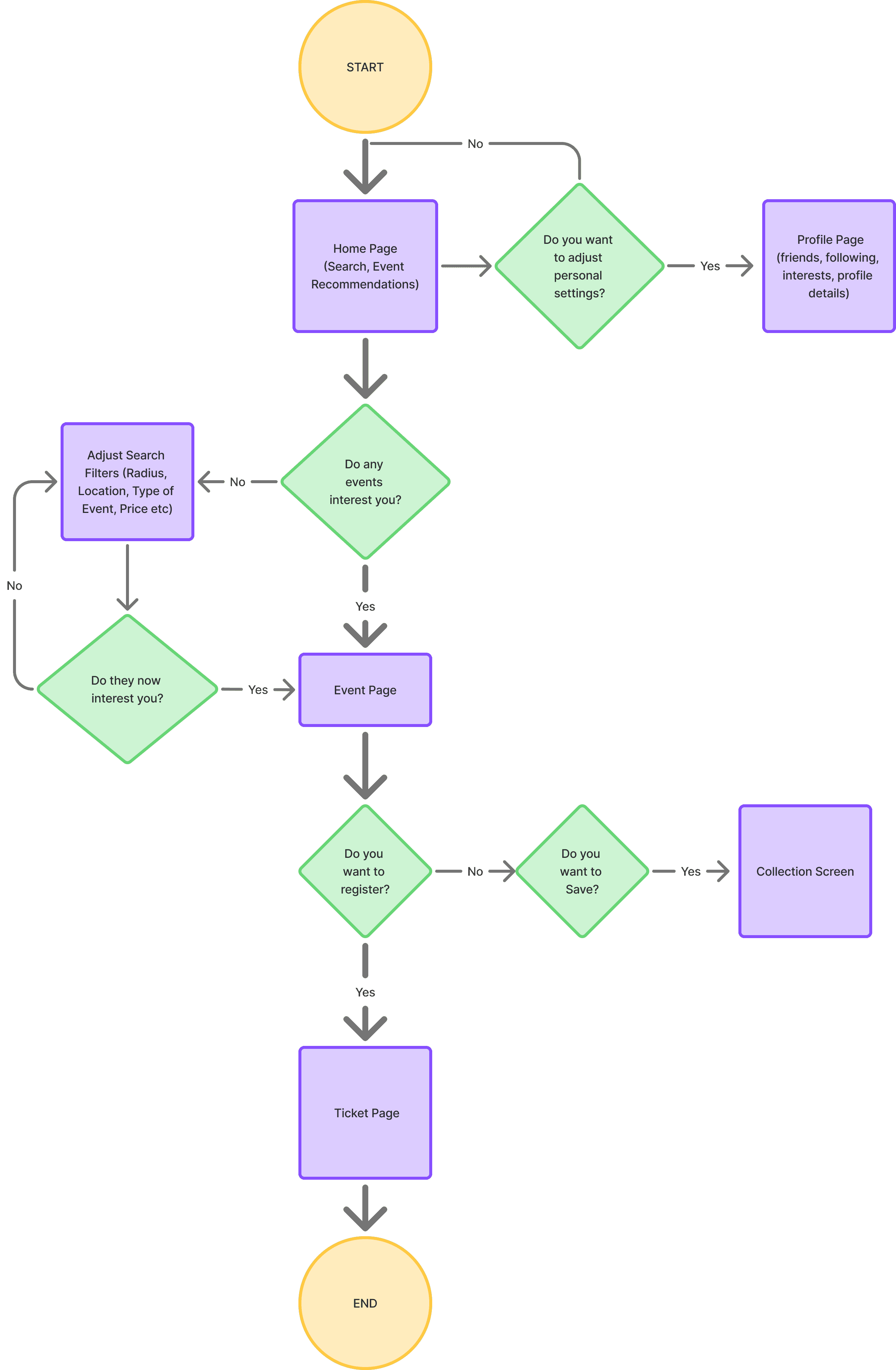
Final lo-fi sketches
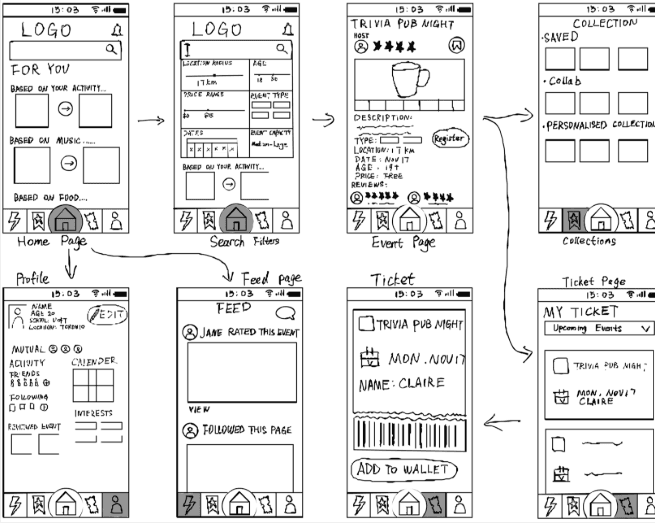
Usability Testing
While UI was considered intuitive, features needed flushing out
I conducted and assisted in four out of eight usability tests. Users were tasked to find and register for an event based on a factor of simulated user preferences. The results showcased the features that were initially scaled back on were more foundational than originally thought
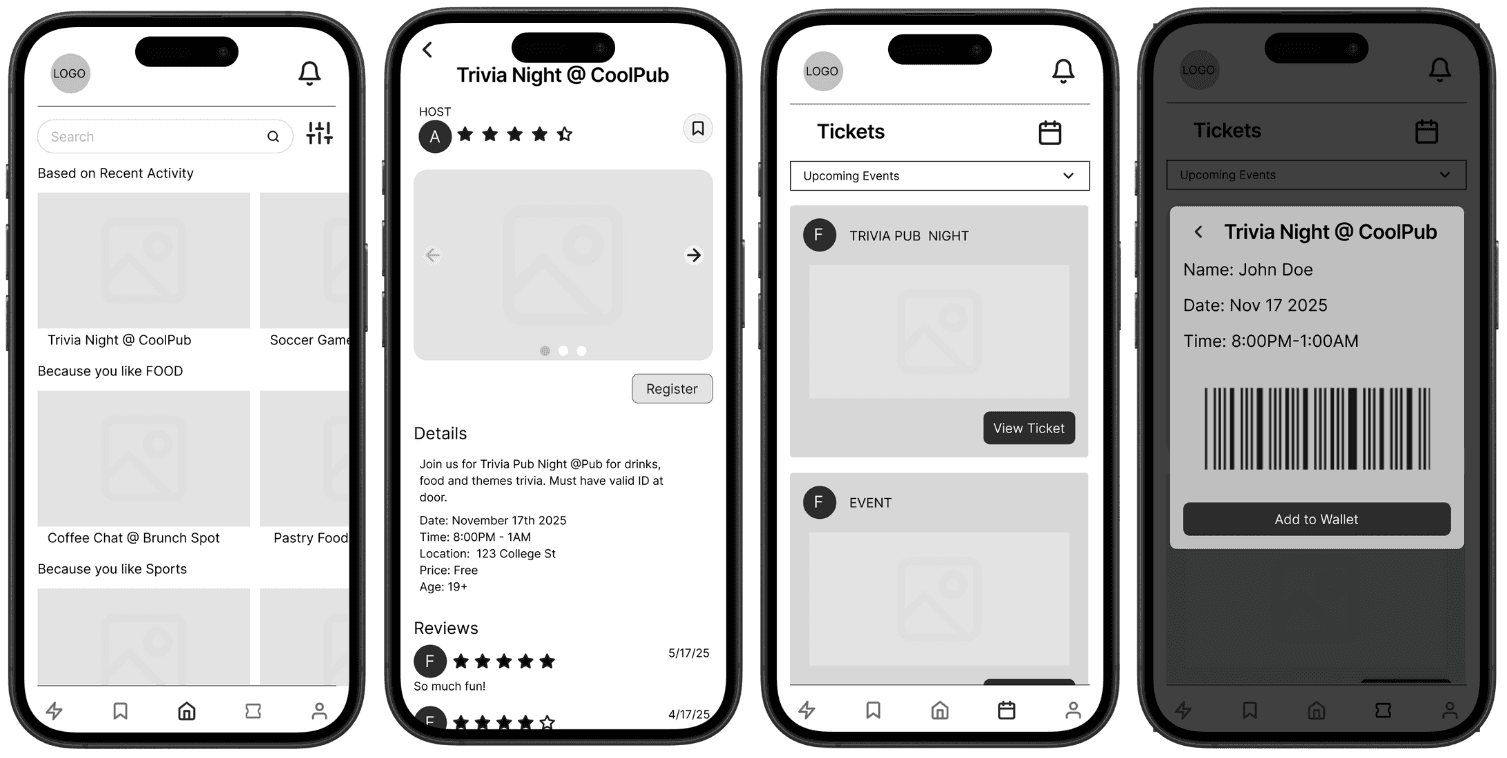
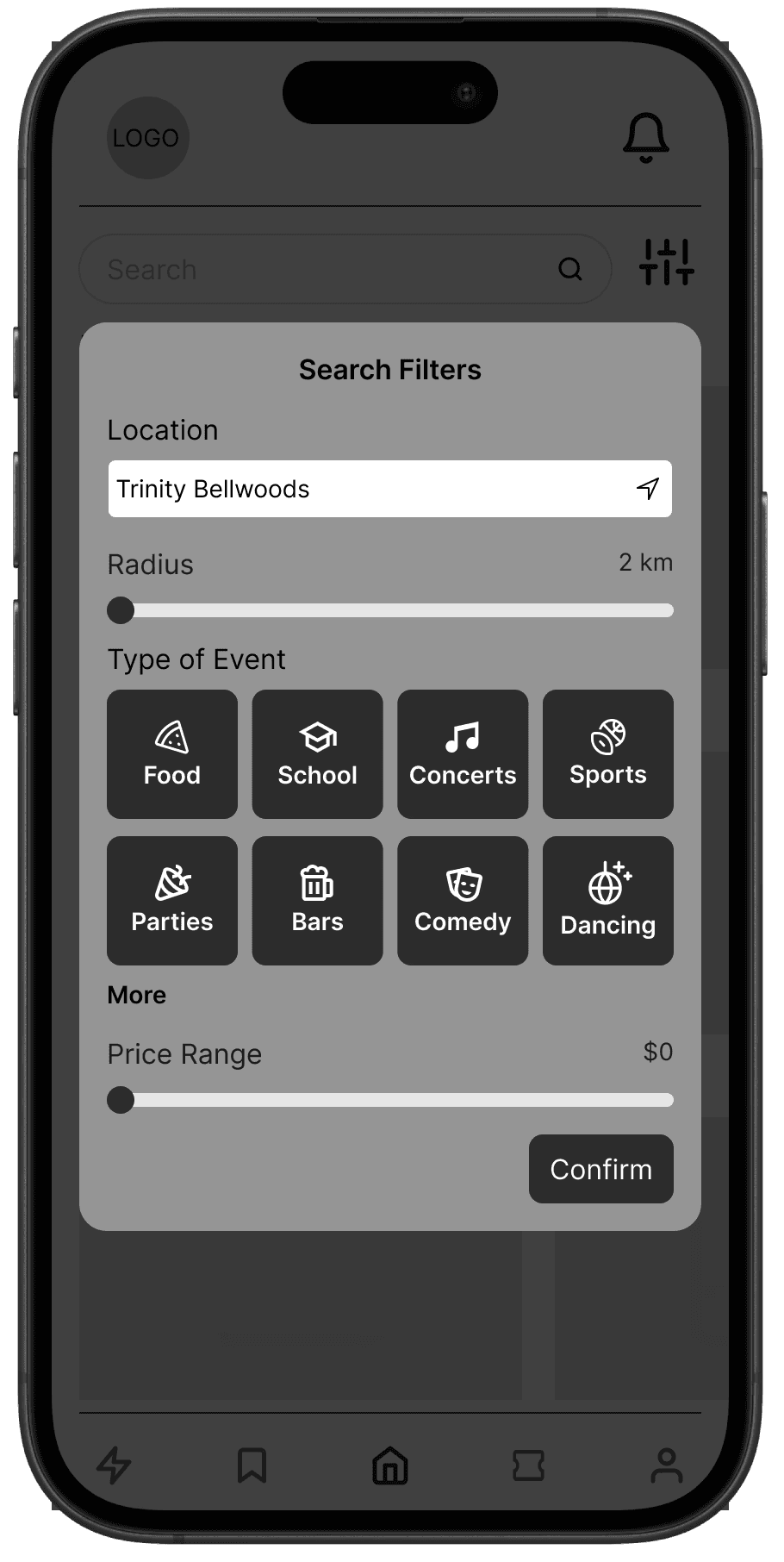
Search tools were the natural start point for users
Four users' first instinct were to use the search filters before manually scrolling through the event listings. The search filters were not interactive or fully developed yet, highlighting a key area for design improvement
Event listings lacked detail and text differentiation
Search filters lack interaction
Absence of key filters such as date and time
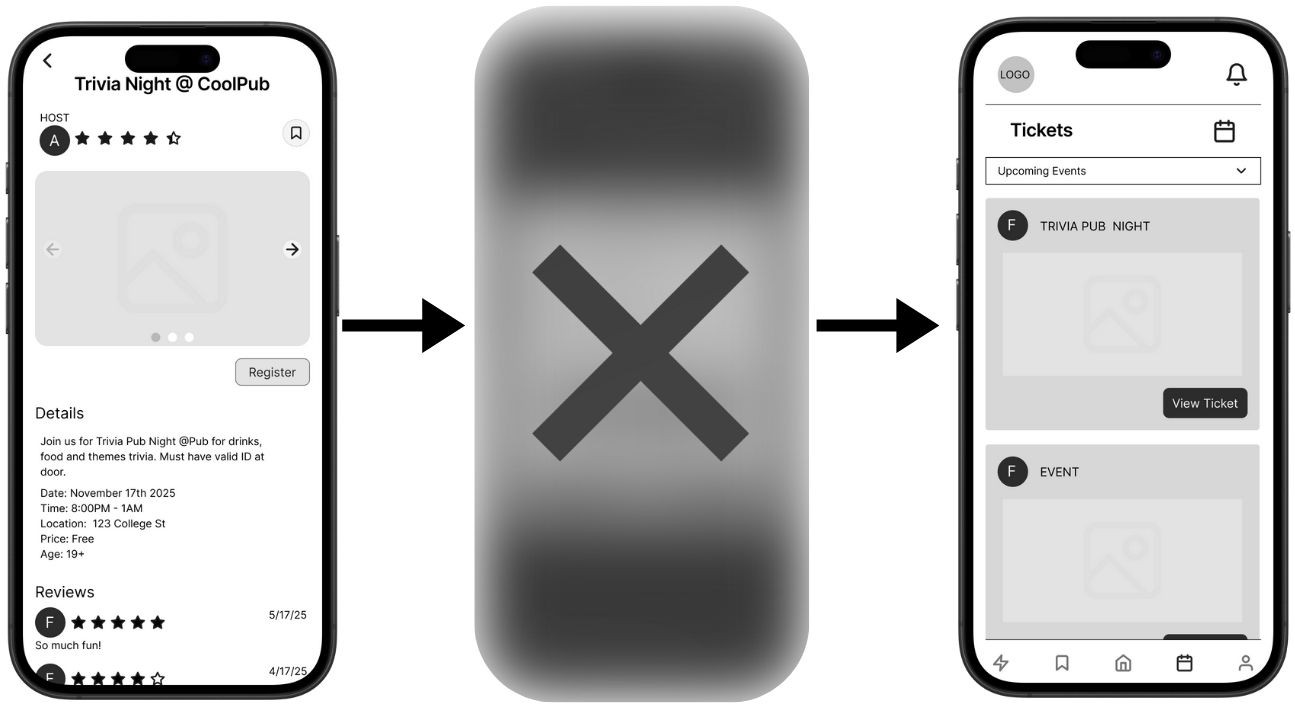
User task flow from event registration to ticketing missed a critical next action step
Four users needed clarification on whether event registration was confirmed before proceeding to the next task step. The absence of registration confirmation created uncertainty and heavily disrupted user task flow
Social features did not go unnoticed
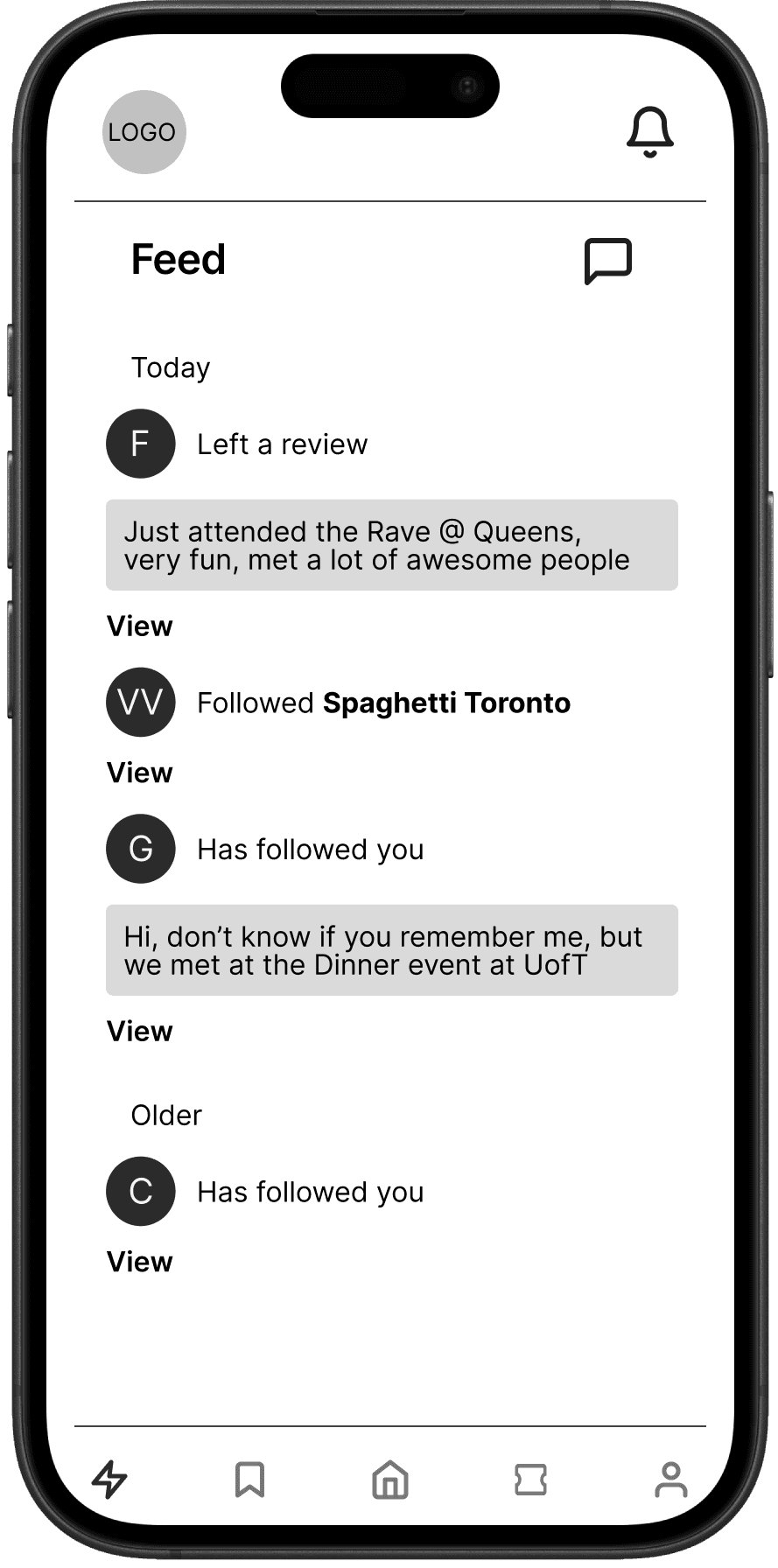
Although social interactivity was not part of this test’s task flow, three users independently asked about these features. One user expressed interest in the Feed page but felt the screen design lacked clarity, while another noted that the chat feature should be more prominent
Event listings lacked detail and text differentiation
Design does not portray social interactivity effectively
Chat icon lacks prominence
Design Revisions
Iterating on user feedback to advocate for user needs
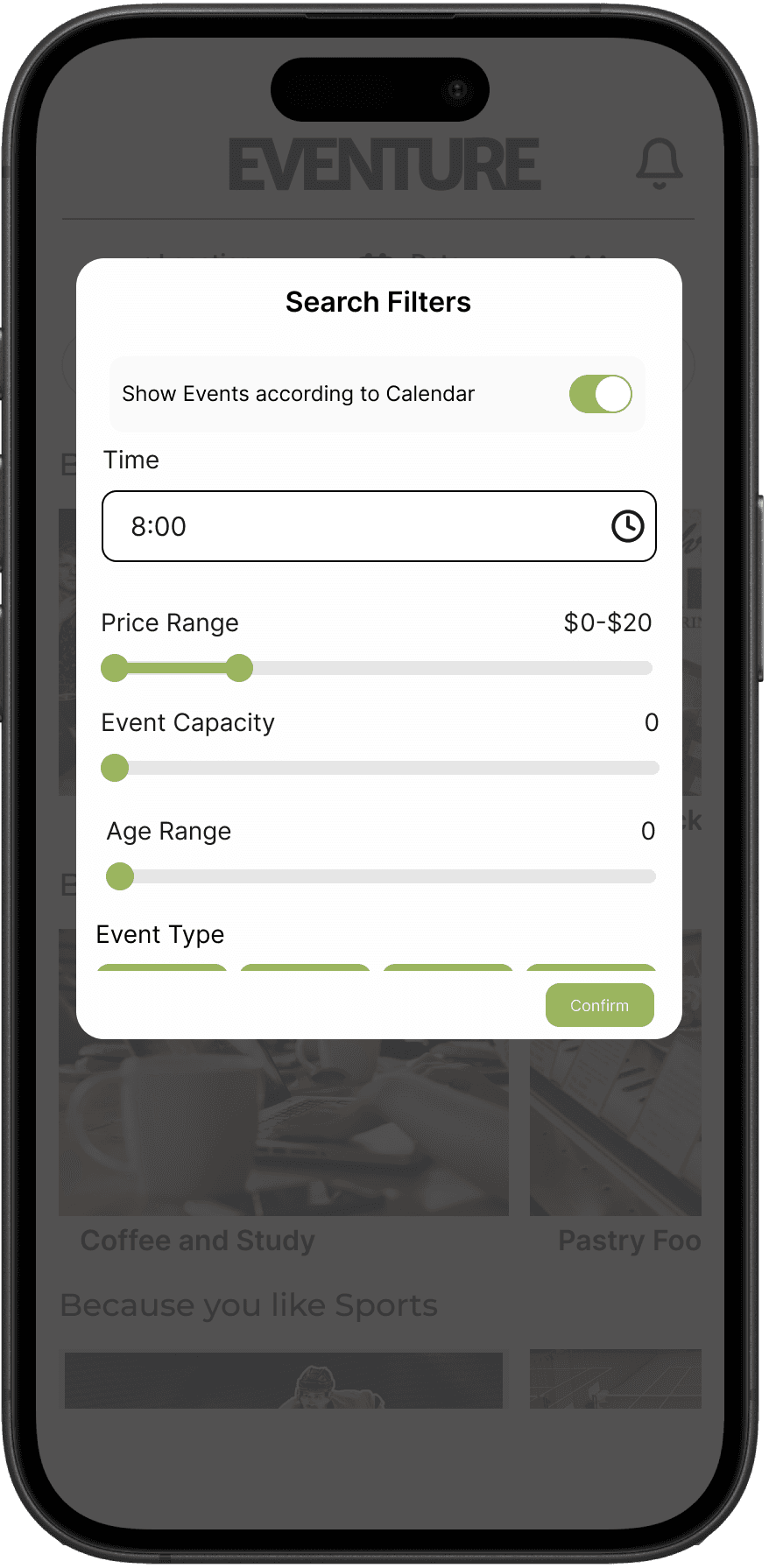
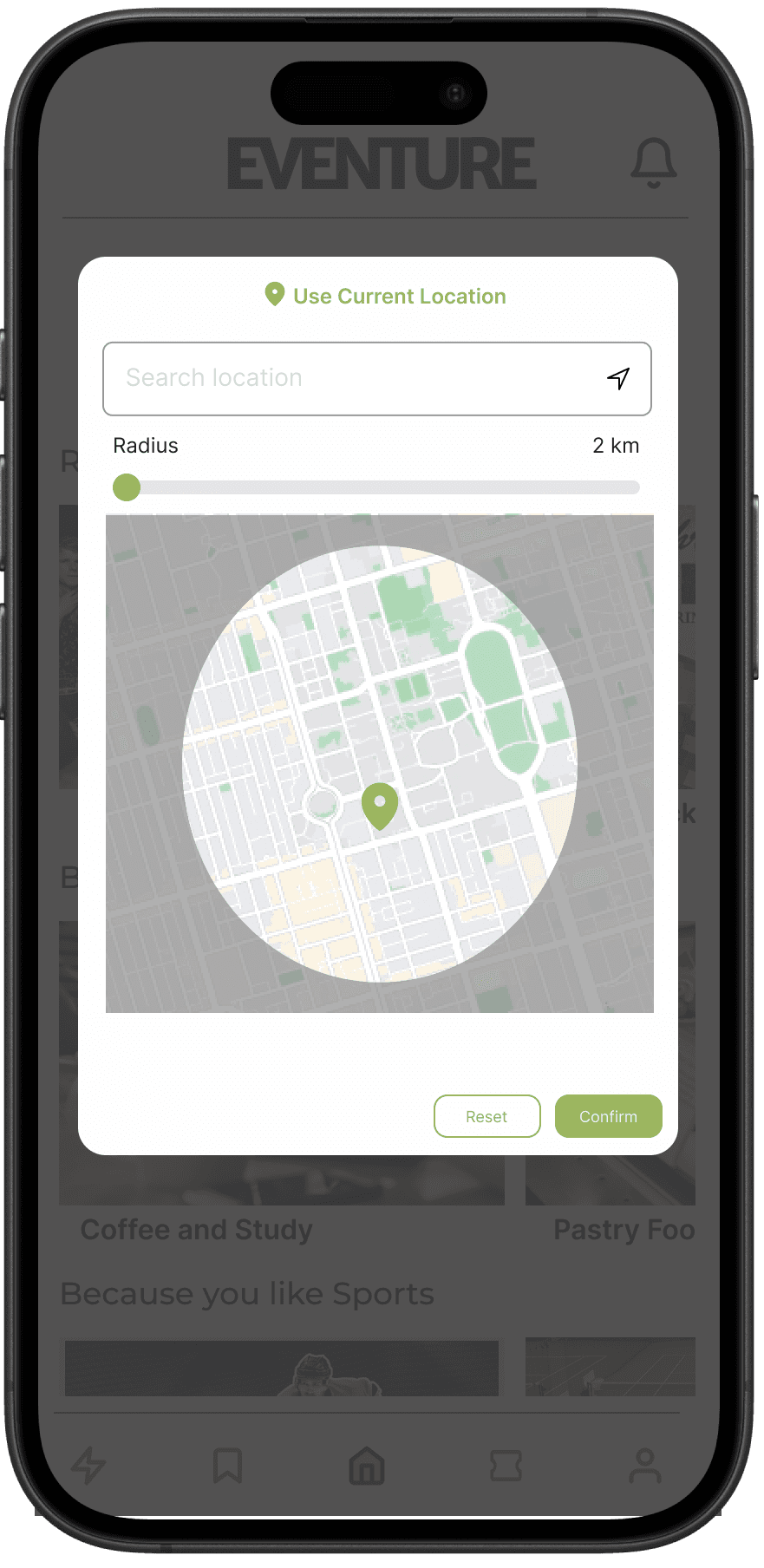
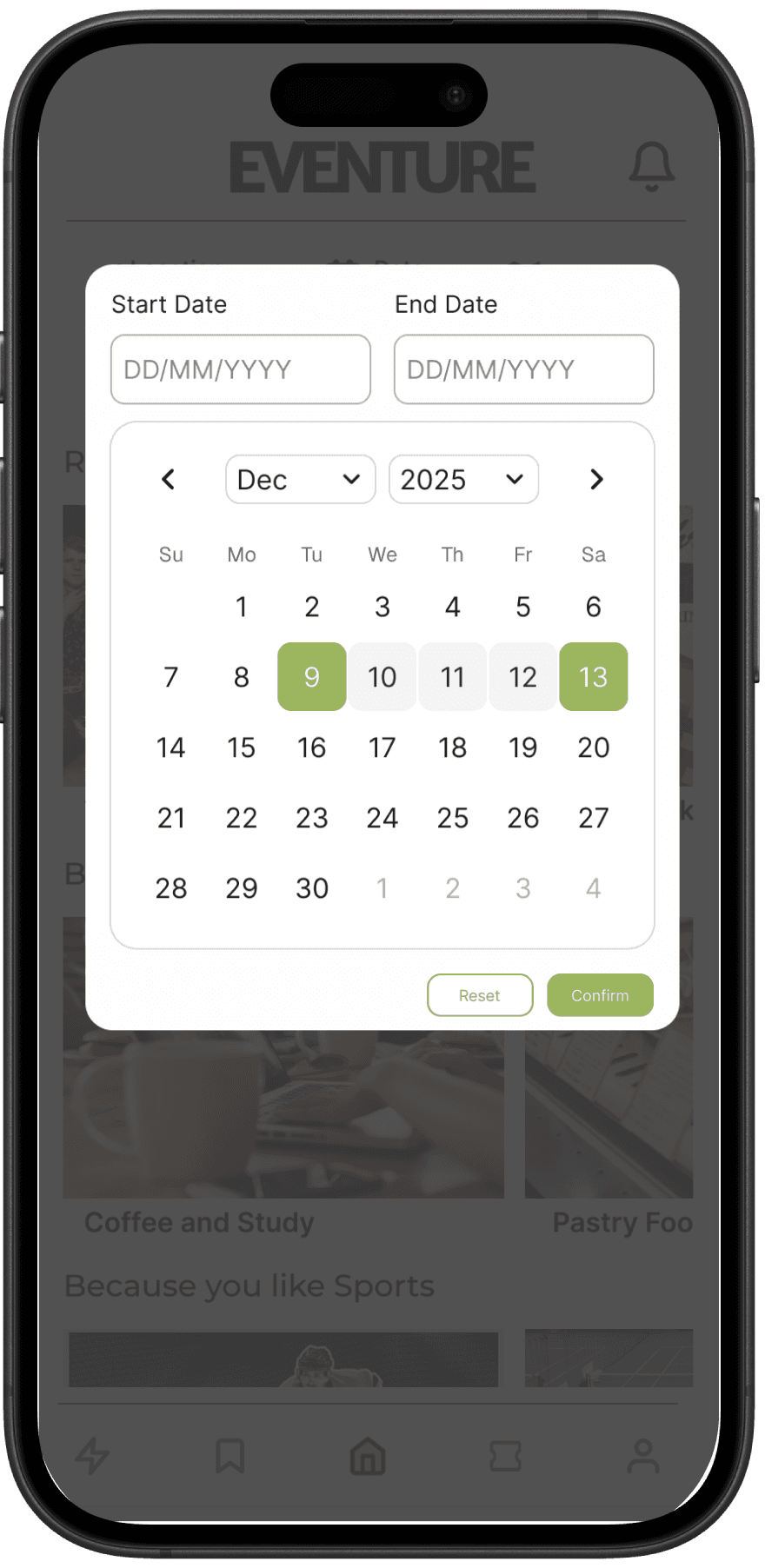
Based on usability testing, I prioritized designing functional search filters, a confirmation step to create a clear and concise experience, and more visible social features to showcase the apps interactivity features
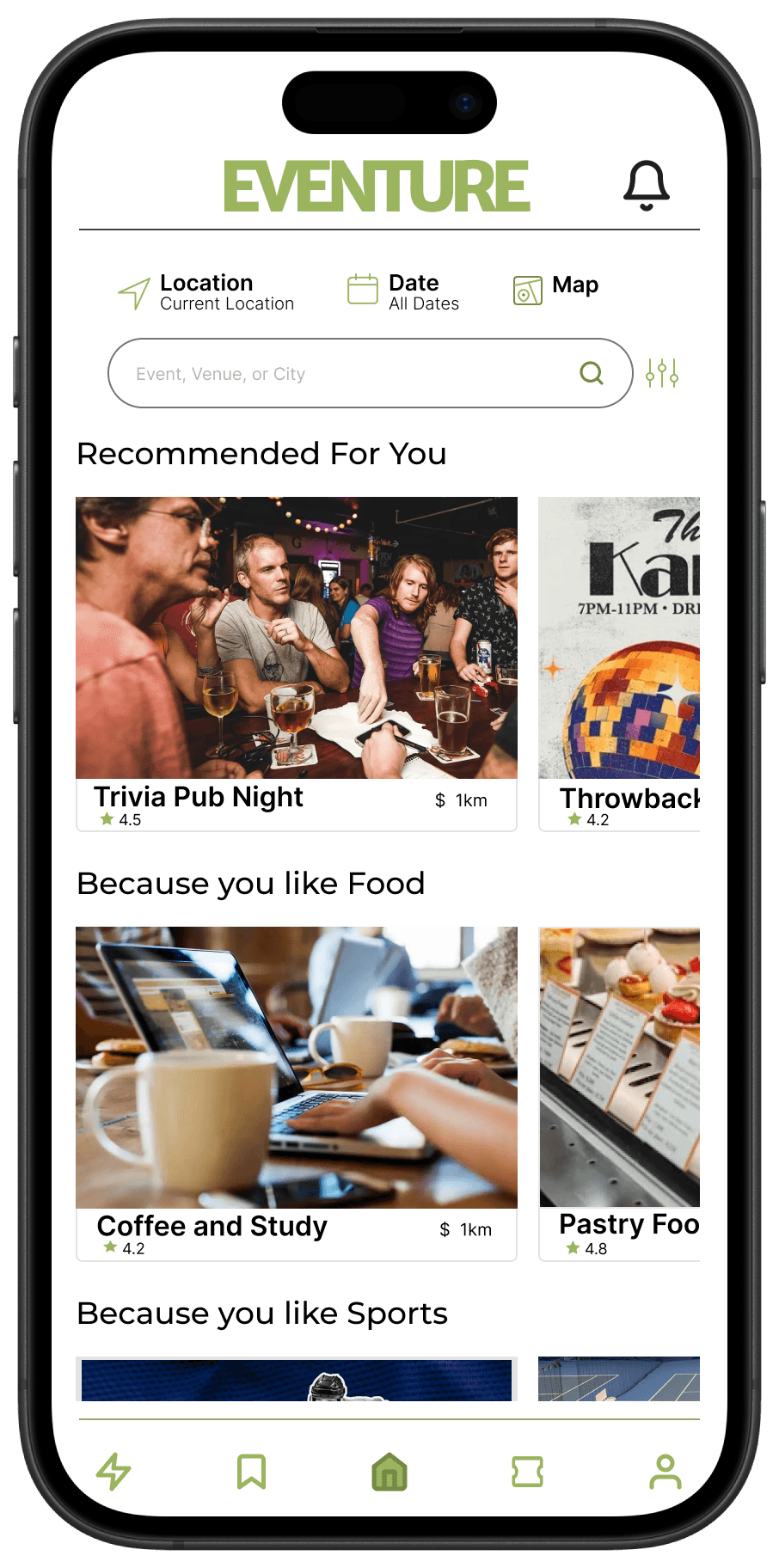
Making search more accessible at first glance and touch
I implemented prominent Location and Date filters above search, redesigned advanced search filters, and enhanced homepage visuals with detailed event information and images to better support users’ first interactions
Improving user flow with confirmation and clear CTAs
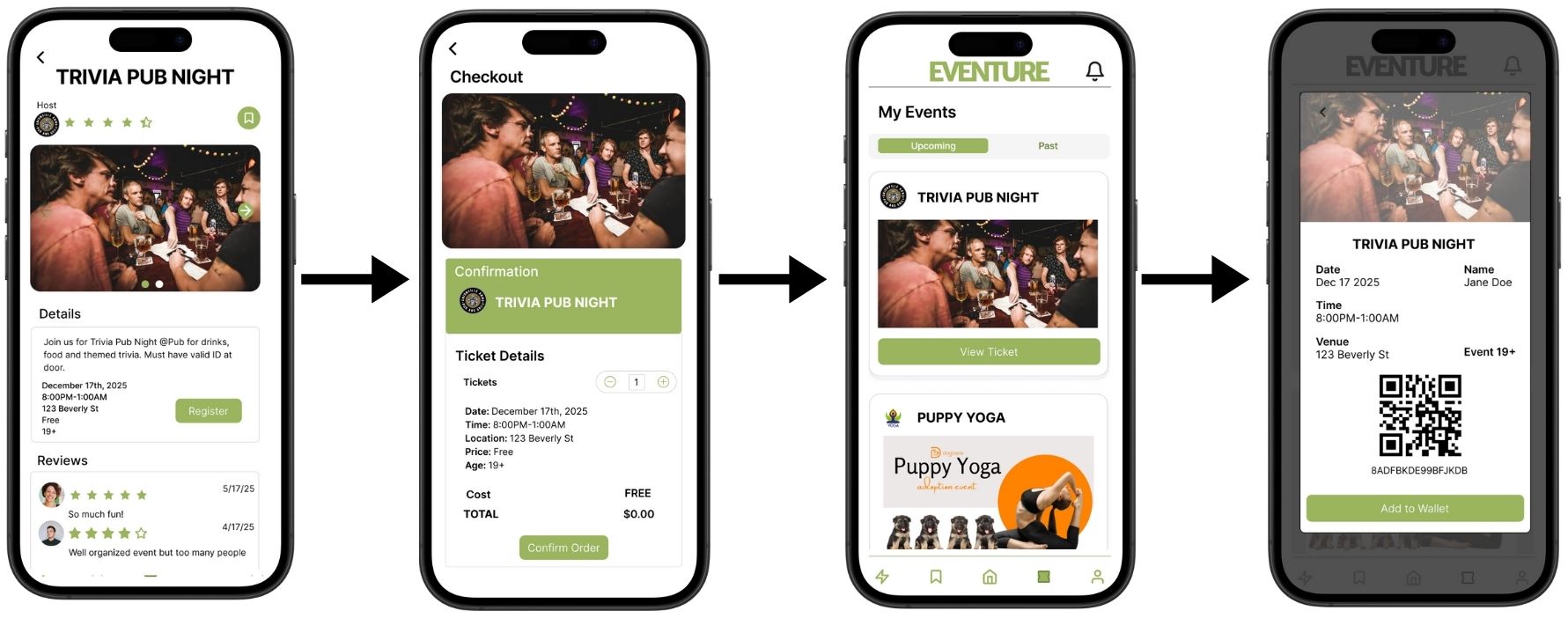
I introduced an Event Checkout confirmation page and strengthened visual hierarchy with more prominent buttons to guide users confidently toward the Ticket Page
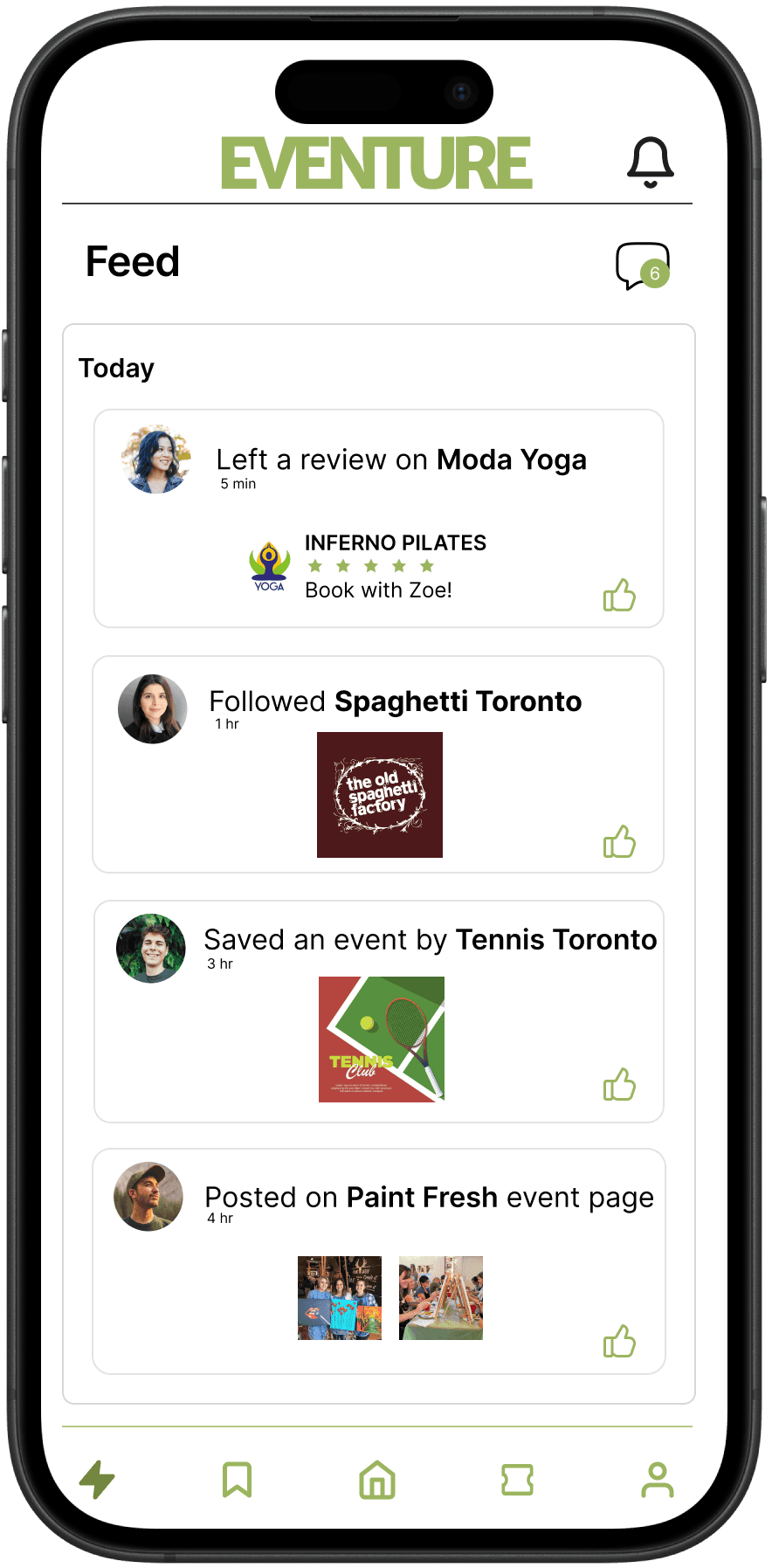
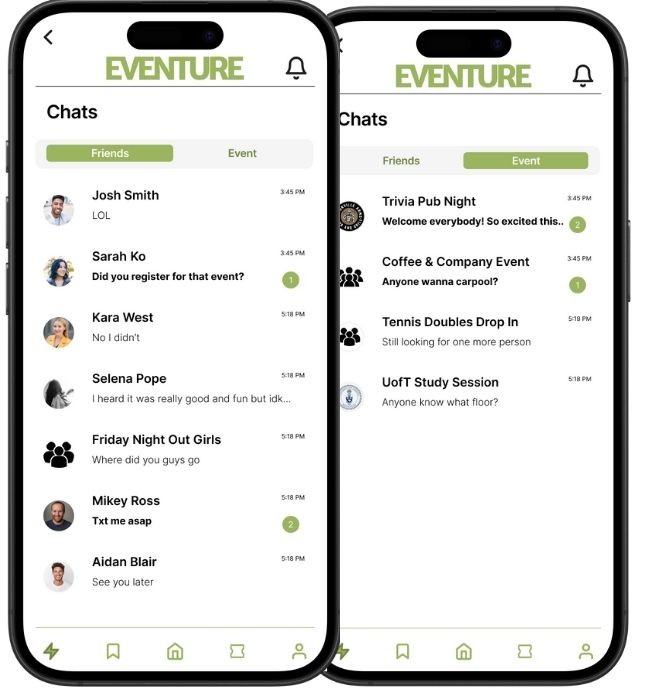
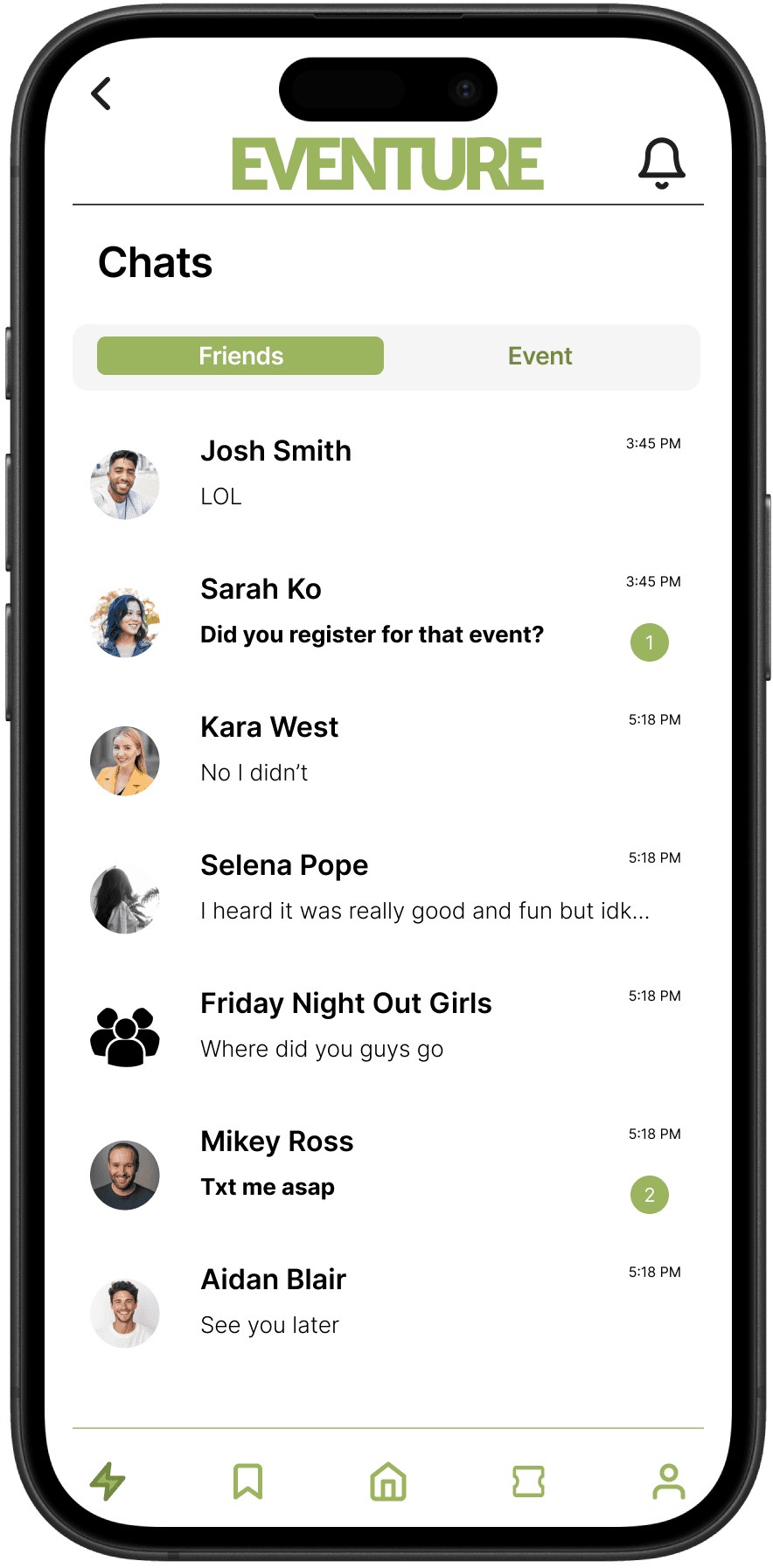
Enhancing social interactivity through visual clarity
I Redesigned page structure to improve visual comprehension, while adding Feed reactions and a functional Chat feature to encourage user interaction and reinforce the platform’s social interaction opportunties
Event listings lacked detail and text differentiation
Final Design
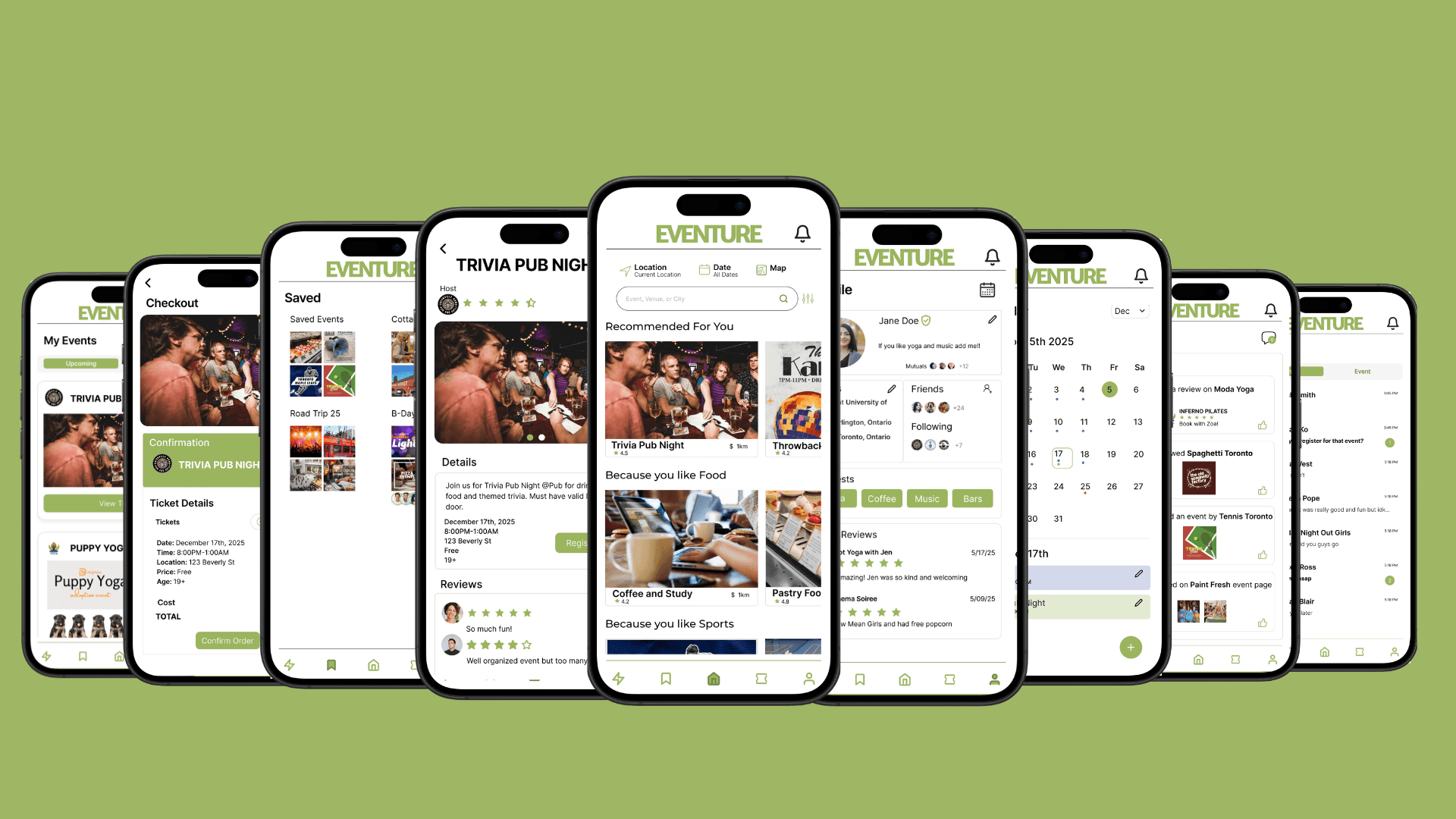
Eventure is centralized platform that provides accessible social opportunities tailored to individual needs
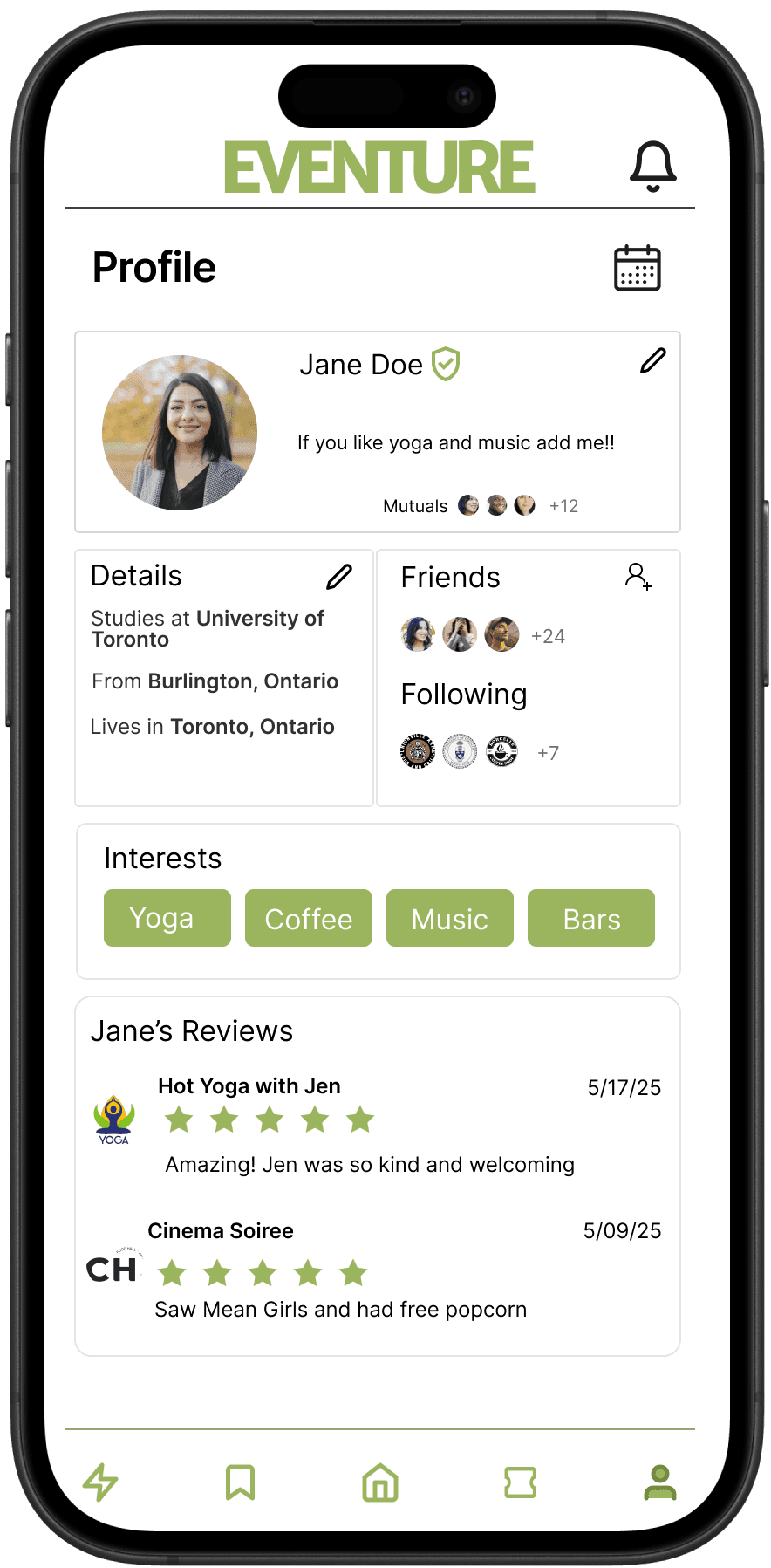
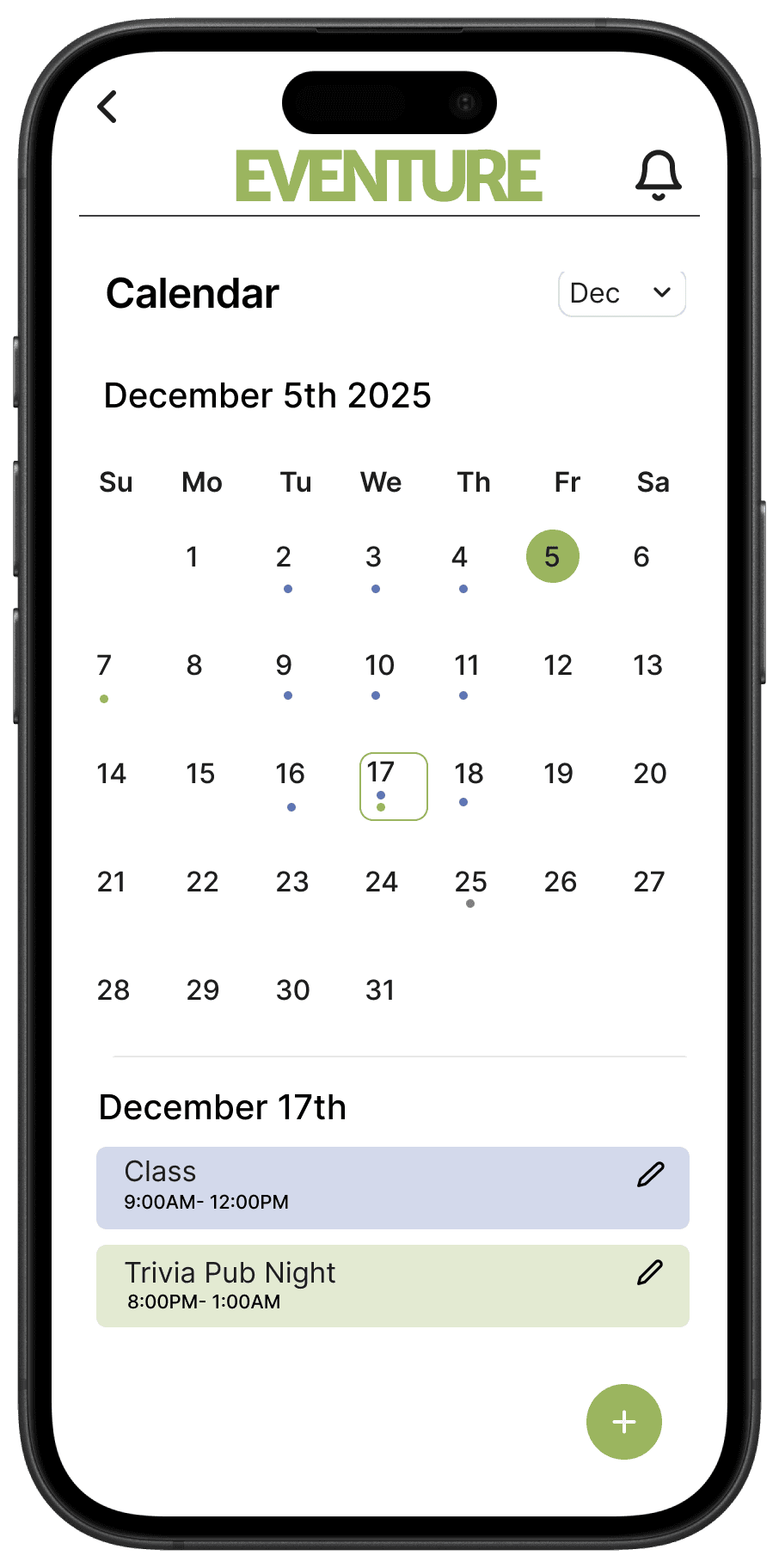
A user-focused experience that extends event discovery beyond attendance to community. Through curated event recommendations and opportunities for users to connect before and after events, Eventure is designed to reduce barriers associated with social participation and create more engaging and meaningful social experiences
Pre and post event profile customization and social interactivity
Event listings lacked detail and text differentiation
Event listings lacked detail and text differentiation
Event listings lacked detail and text differentiation
Event discovery
Event registration
Reflection
Prioritizing Early Feature Exploration
I would dedicate more time to the initial prototype design and feature planning phase. While there were several ideas ideated, many were left out and were repeatedly mentioned or recommended by participants during usability testing. Incorporating some of these features earlier would have allowed us to gather more meaningful user feedback and better understand how they could strengthen both the UI and overall experience.
Role
UX/UI Designer
UX Researcher
Skills
Research Analysis
Visual Design
Prototyping
Usability Testing
Collaborators
Rohin Ebadi
Yujia Sun
Hao Ma
Duration
12 weeks